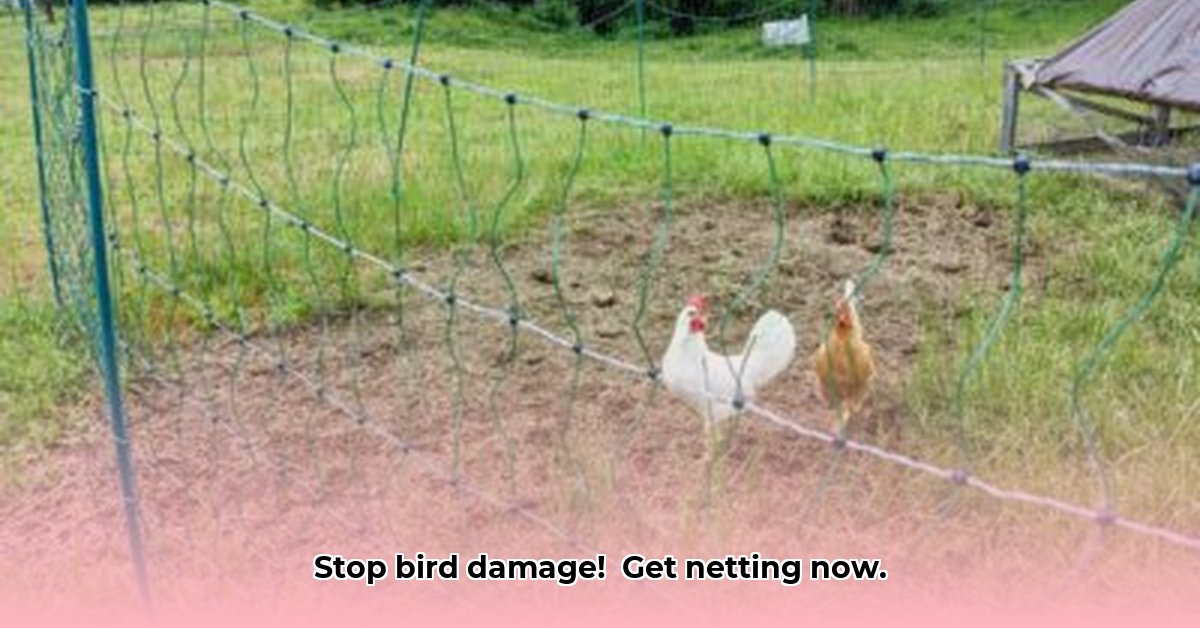
Protecting your crops from bird damage is crucial for sustainable agriculture. Bird netting offers a practical solution, and Tractor Supply provides a variety of options. For more information on bird cages, check out this resource. This guide compares heavy-duty and lightweight netting, provides installation instructions, and explores alternative bird deterrent methods.
Choosing the Right Bird Netting: Heavy-Duty vs. Lightweight
Tractor Supply offers heavy-duty and lightweight bird netting. The best choice depends on your specific needs, budget, and climate.
Heavy-Duty Netting: This option provides superior durability and a longer lifespan (3-5 years), making it ideal for large crops, strong winds, or harsh weather conditions. While more expensive upfront, the extended use reduces long-term costs. It's recommended for protecting larger, more robust plants like corn or sunflowers against significant bird predation.
Lightweight Netting: This budget-friendly option is suitable for smaller gardens or delicate plants. It's easier to install but has a shorter lifespan (1-2 years), requiring more frequent replacements. Best suited for smaller, delicate plants like berries or lettuce in milder climates.
Decision-Making Guide: Selecting the Right Netting
The table below summarizes key considerations for choosing between heavy-duty and lightweight bird netting.
| Factor | Heavy-Duty Netting | Lightweight Netting | Considerations |
|---|---|---|---|
| Crop Type | Large, robust plants (e.g., corn, sunflowers) | Smaller, delicate plants (e.g., berries, lettuce) | Consider plant fragility and potential damage from netting. |
| Budget | Higher initial cost, lower long-term cost | Lower initial cost, higher long-term cost | Consider total cost over the netting's lifespan. |
| Climate | Strong winds, harsh weather | Mild climates, less extreme conditions | Your area's typical weather significantly impacts netting longevity. |
| Expected Lifespan | 3-5 years | 1-2 years | Consider the duration of your crop-growing season. |
Installing Your Bird Netting: A Step-by-Step Guide
Effective bird control relies on proper installation. Follow these steps:
- Measure and Cut: Accurately measure the area; add extra for overlap. Cut the netting carefully using sharp scissors.
- Secure the Netting: Use strong stakes or clips to firmly secure the netting to the ground or supporting structures. Ensure a tight fit.
- Provide Support: For larger areas or tall plants, use additional support poles or stakes to maintain tautness and prevent sagging.
- Overlap Edges: Overlap netting edges to ensure a complete barrier, preventing birds from exploiting gaps.
- Regular Inspection: Regularly inspect for tears or damage. Repair minor damage with strong, weather-resistant tape.
Maintenance and Responsible Disposal
Regular inspection extends netting lifespan. Repair minor tears immediately. When the netting reaches the end of its life, dispose of it responsibly. Check your local waste management guidelines for recycling or disposal options. Consider reusable alternatives for increased sustainability.
Beyond Netting: Alternative Bird Deterrents
While netting is effective, consider these alternative or complementary methods:
- Sonic Deterrents: High-frequency sound devices deter birds from approaching your crops.
- Visual Deterrents: Shiny ribbons, reflective tape, or other visually distracting elements can startle birds.
- Scarecrows: Surprisingly effective, particularly when combined with other methods. Regular relocation maintains their effectiveness.
Choosing the Best Bird Netting for Sustainable Agriculture: Prioritizing Lifespan and Cost
Choosing the right netting balances cost-effectiveness and longevity. Higher-quality netting, while more expensive initially, can save money in the long run by reducing the need for frequent replacements. Consider your budget, the scale of your operation, and the specific needs of your crops when making a decision.
Key Considerations:
- Mesh size impacts effectiveness (smaller meshes deter smaller birds).
- Material durability determines lifespan and influences cost (UV-treated polyethylene or polypropylene are durable options).
- Proper installation maximizes effectiveness.
- Balance your budget with the scale of your operation.
- Check local regulations regarding mesh size and materials.